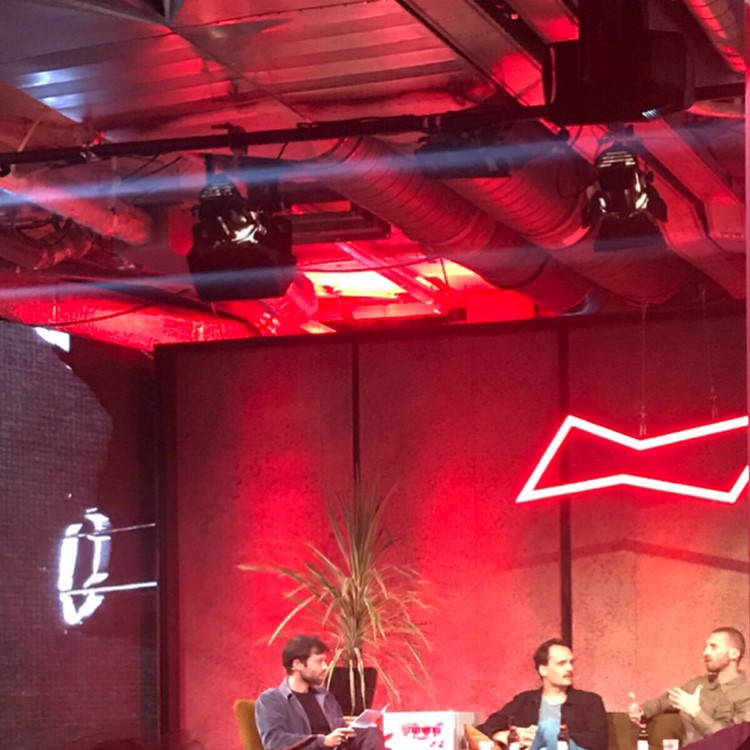
I went to the event with expectations of a dedicated crowd, informality and a lot of introductions. To a degree, that’s what I found. I came, thinking from with the angle of my research question, ‘is genre a necessary social construct?’ With this ambiguous statement in mind, I delved deep into what BUD X Amsterdam had to offer.
Day one and the audience saw discussion on an array of topics, including ‘The LGBTQ+ Roots of Club Culture’ and an interview with Dutch musicians and label owners Detroit Swindle. It was obvious the audience was engrossed by the talks, with a room full of continuous head gestures and other acknowledgements of agreement and disagreement. Over in room one, The New Originals kept the arriving guests excited spinning records on their handmade sound system, playing classic, and loved, tunes from The Notorious B.I.G, Talking Heads and more. An accurate introductory set to the sounds to be heard over the next two days.
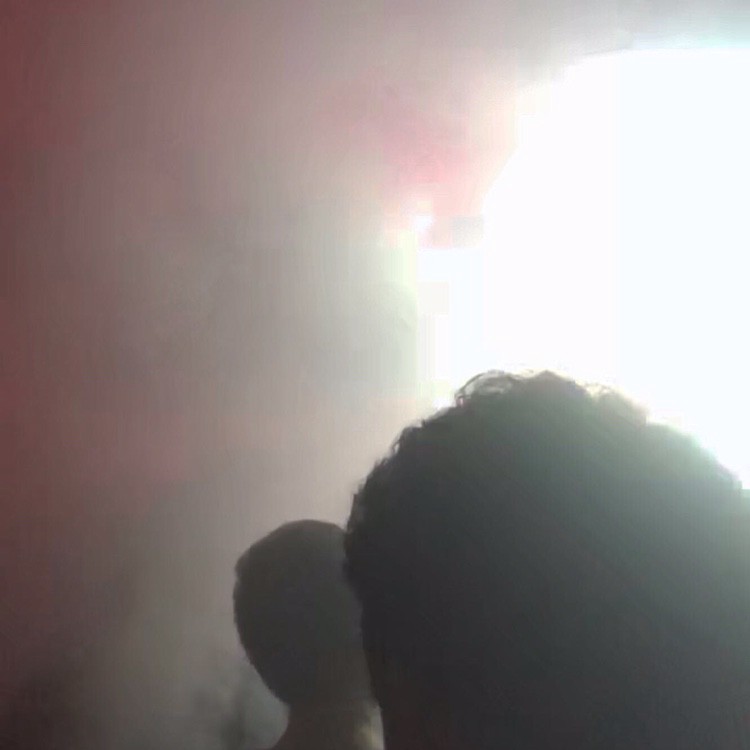
Through the factory-style swinging doors, into the next room which is filled with darkness, separated in two by a wall of light. Instantly I was intrigued, what is this I am looking at? Lasers pointing from the ceiling created beams of lights which ended with sharp lines across the floor, changing colour. A show of abstract sounds and bass had been programmed to intensify throughout the day, and when developing, the lasers moved, creating the illusion of tremors on the floor. With longer, deeper sounds the waves of light moved slowly, building up to an explosion of percussion which saw the light react with colour changes, an increase of speed and a skew in direction. At times, I felt as though I was inside a segment of software, expereincing the auditive and visual versions of the sound waves play.
As the evening rolled on, Kamma started the live set with the funky sounds of bass guitars and the brass family, easing the crowd into some easy dancing. The development of her set was impeccable, introducing a powerful kick into her mix, hyped by MC ‘Shamiro’. The atmosphere became more immersive, as Kamma’s energy and clear passion for music radiated across the room. Tom Trago carried on the vibe, playing for a crowd that almost doubled in size throughout his set. The room was engaged, seeing faces light up as each drop brought a new layer to the set. Detroit Swindle took the stage and exceeded every expectation, combining the sounds of disco, house and funk, eliciting an energetic response from the crowd. Before Kerri Chandler carried us to the end of day one, RAITO. X Boris Acket performed their live installation to the full crowd. At first, the audience responded with confusion to the interlude, screaming for Kerri to begin. However, as the installation progressed, member by member became locked in, as if the realisation brought on a stiffness, quite different to the atmosphere just minutes before. As the bass began to move from speaker to speaker across the room, the lights followed in sudden flashes of light, parallel to the route of the bass. The precision of each sound and light created a thunderstorm of emotion in the crowd, with each wave filling my whole body with vibrations that left me feeling shocked, as if I had experienced a rush of adrenaline. The crowd was in awe of the display, and at the peak of the show, Chandler takes over the decks. With an excited and vulnerable crowd, the evening ended with a set completed with finely selected tracks from Chandlers extensive library of music, allowing the crowd to dance, sing and discover new songs.
Through the factory-style swinging doors, into the next room which is filled with darkness, separated in two by a wall of light. Instantly I was intrigued, what is this I am looking at? Lasers pointing from the ceiling created beams of lights which ended with sharp lines across the floor, changing colour. A show of abstract sounds and bass had been programmed to intensify throughout the day, and when developing, the lasers moved, creating the illusion of tremors on the floor. With longer, deeper sounds the waves of light moved slowly, building up to an explosion of percussion which saw the light react with colour changes, an increase of speed and a skew in direction. At times, I felt as though I was inside a segment of software, expereincing the auditive and visual versions of the sound waves play.
As the evening rolled on, Kamma started the live set with the funky sounds of bass guitars and the brass family, easing the crowd into some easy dancing. The development of her set was impeccable, introducing a powerful kick into her mix, hyped by MC ‘Shamiro’. The atmosphere became more immersive, as Kamma’s energy and clear passion for music radiated across the room. Tom Trago carried on the vibe, playing for a crowd that almost doubled in size throughout his set. The room was engaged, seeing faces light up as each drop brought a new layer to the set. Detroit Swindle took the stage and exceeded every expectation, combining the sounds of disco, house and funk, eliciting an energetic response from the crowd. Before Kerri Chandler carried us to the end of day one, RAITO. X Boris Acket performed their live installation to the full crowd. At first, the audience responded with confusion to the interlude, screaming for Kerri to begin. However, as the installation progressed, member by member became locked in, as if the realisation brought on a stiffness, quite different to the atmosphere just minutes before. As the bass began to move from speaker to speaker across the room, the lights followed in sudden flashes of light, parallel to the route of the bass. The precision of each sound and light created a thunderstorm of emotion in the crowd, with each wave filling my whole body with vibrations that left me feeling shocked, as if I had experienced a rush of adrenaline. The crowd was in awe of the display, and at the peak of the show, Chandler takes over the decks. With an excited and vulnerable crowd, the evening ended with a set completed with finely selected tracks from Chandlers extensive library of music, allowing the crowd to dance, sing and discover new songs.
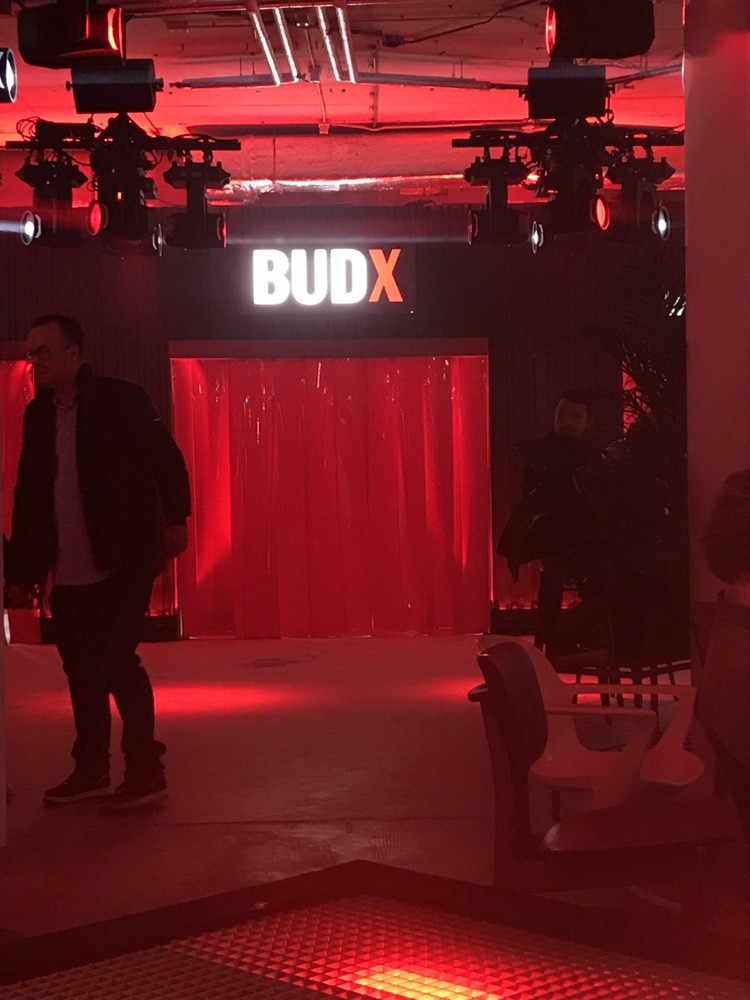
Day two began with a different theme of the day, exploring hip-hop culture with a fresh set of panels and live sets. As the guests began arriving I noticed how the presence of the streetwear style was more prevalent than the previous day, seeing each pair of Nike’s become rarer and rarer. Speakers from Amsterdam Beats Worldwide and Sexyland, amongst others, touched on topics such as ‘Fashion, Hip-Hop and Amsterdam’, answering questions on counter culture and the underground scene. In room one, TNO set the mood for the evening playing tracks with a considerably slower BPM in comparison to day one, spinning artists such as Ashanti and Kendrick Lamar. The famliarity of these songs brought a sense of happiness to the room, with the crowd singing along to each tune.
The evening began with a set from Rachel Green, though the crowd was smaller, the room did not lack energy as she played Latin infused bass house with a bassline and synthesised vocals. In combination with a strong topper and the sound of a vintage organ, Green incorporated a huge range of genres, without compromising her style and technique. It was apparent that the goal of this evening with different than day one, as this night seemed to provoke seductiveness and mystery through its music that was not the most fulfilling emotion previously. Full Crate, Ray Fuego and headliner Jarreau Vandal kept delivering to the crowd, using the power of the MC to keep everyone engaged and feeling ‘sexual’. Tracks from Anderson Pak and Luther Vandross took the audience on a journey down the timeline of soul and funk music, constantly diverting to other genres, hearing the likes of Tyler The Creator and Justin Timberlake. Whilst there was also a high concentration of tropical sounds and beats throughout the set, with bells and synthesised guitar riffs creating the ‘carnival vibe’ as one member of the audience explained.
In relation to the question, (is genre a necessary construct of society?), I concluded that BUD X Amsterdam provides cultural evidence that a community can benefit from the ignorance of genre. As to be written in my main thesis, genre is used to structurally define music, or more generally, the arts. We live in a post-genre era in which the categorisation of art restricts its own development. Venues and artistic communities across major cultural cities such as London, Amsterdam and Berlin are facing the effects of isolation within their genres, with renowned clubs such as Berghain are becoming so inclusive they are exclusive.
BUD X Amsterdam ignored these boundaries, incorporating each scene into its curation, creating a two day event that was so immersive to its audience as it allowed the unexpected to be experienced. As people from across the creative industry gathered together, new connections were made, allowing the audience to explore a range of completely different mediums which enhanced one another so effectively, it left people with comments such as:
‘ A satisfying combination.’- GB
‘I didn’t know I liked Kanye.’- NL
‘I have absolutely no idea what genre this is.’-NL
Written by Chloe Elms
 Loose Theories.
Leave a comment